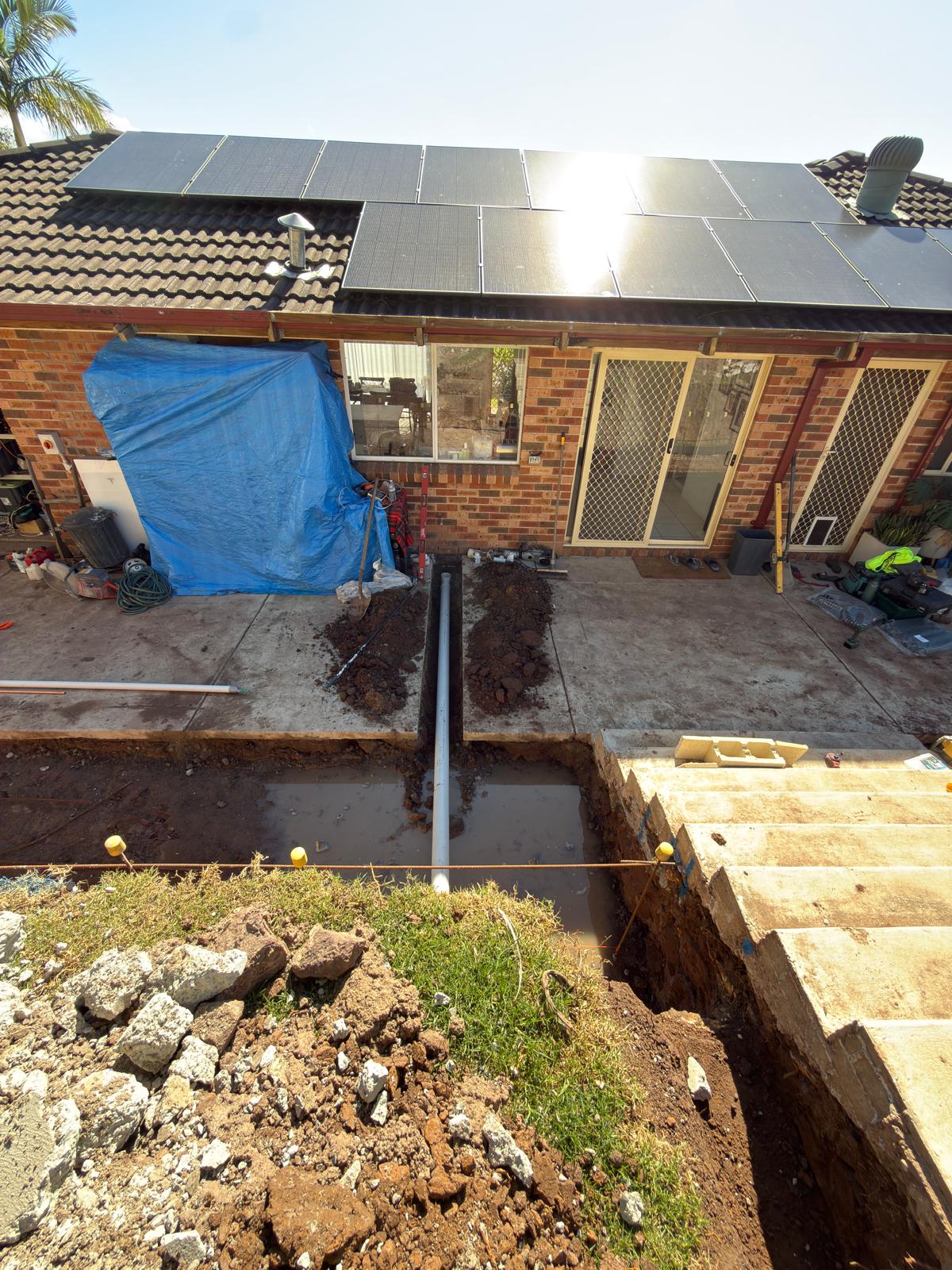
Pipe relining repairs a cracked, leaking or root-damaged pipe from the inside by curing a resin-soaked liner in place, creating a new jointless pipe within the old one — without digging a trench through your garden, driveway or slab. It's worth it when the old pipe still holds its shape. If the pipe has collapsed, has a bad sag or needs to be bigger, digging it up and replacing it is the better fix.
What is pipe relining?
Pipe relining — also called cured-in-place pipe, or CIPP — uses a flexible liner soaked in resin. The liner is pulled or inverted through the existing pipe, inflated against the inside wall, and left to cure. Once hard, it forms a smooth, jointless pipe-within-a-pipe. Liner manufacturers typically quote a design life of around 50 years.
How pipe relining works, step by step
- Camera inspection to map the defects, measure the pipe and confirm it's suitable for relining
- High-pressure jetting to clear roots, grease and scale back to the pipe wall
- The liner is cut to length and soaked in resin
- The liner is pulled or inverted into the pipe and inflated against the old pipe wall
- The resin cures in place and the liner hardens into a new pipe
- Branch connections are reopened where needed, then a final camera pass checks the result
Types of pipe relining
- Patch (sectional) relining — a short liner over a single cracked joint or root entry. Ideal when the rest of the line is sound.
- Full-length relining — the whole run between access points, for pipes with defects along their length.
- Junction relining — seals the connection where a branch line meets the main, one of the most common root entry points.
Pipe replacement (excavation)
The old pipe is dug up, removed and replaced with new PVC. Garden beds, paths, paving and driveways above it have to be cut and reinstated, which often adds significantly to the overall job and the disruption.
When relining wins
- The pipe is structurally mostly there (cracks, root intrusion, minor displacement)
- The pipe runs under a slab, driveway, paving or an established garden
- Several short sections along one line need repair
- You want minimal disruption to the property
When excavation wins
- The pipe has fully collapsed or lost its shape — the liner needs something to inflate against
- There's a severe sag or back-fall that needs the grade corrected
- The damaged section is short and in soft, easily restored ground
- The pipe diameter needs upgrading
Is pipe relining worth it?
For many older Illawarra sewers — earthenware and clay lines with rubber-ringed or mortar joints running under established gardens, driveways and slabs in suburbs like Albion Park, Warilla, Oak Flats and Wollongong — relining is the less disruptive option. When you compare it with digging, remember excavation also means reinstating whatever sits on top: paving, concrete, lawn and garden beds. Ask for both options scoped in writing so you can compare them properly.
How long does pipe relining last?
Liner manufacturers quote a design life of around 50 years when the liner is installed in a properly cleaned and prepared pipe. Because the new liner has no joints, tree roots have no gaps to get into. The quality of the cleaning and installation matters, which is why the before-and-after camera footage is worth keeping.
What we do on inspection day
Where a blockage keeps coming back or a broken pipe is suspected, a CCTV camera inspection is the right first step — sometimes the line has to be cleared first before the camera can pass. You see the footage, we mark where the defects are, and we give you a written scope for relining or excavation repair side by side, so you can choose on facts, not pressure. If neither is needed yet and a periodic jet clean is the smarter call, we'll tell you that too.
Frequently asked questions
- What is pipe relining?
- Pipe relining repairs a damaged pipe from the inside. A resin-soaked liner is inserted into the old pipe, inflated against its walls and cured in place, forming a new jointless pipe without digging a trench.
- Is pipe relining worth it?
- It usually is when the old pipe still holds its shape and runs under a slab, driveway, paving or established garden, because it avoids digging up and reinstating what's on top. If the pipe has collapsed or has a bad sag, replacement is the better option.
- How long does pipe relining last?
- Liner manufacturers typically quote a design life of around 50 years when the liner is installed in a properly cleaned and prepared pipe.
- Can all pipes be relined?
- No. Pipes that have fully collapsed, lost their shape, have a severe sag or need a bigger diameter usually need excavation and replacement. A camera inspection confirms whether a pipe is suitable.
- Will pipe relining stop tree roots?
- Yes, for the relined section. The liner seals the cracks and joints roots grow through, and because it's jointless there are no gaps for new roots to enter.
- Do I need a camera inspection before relining?
- Yes. A CCTV inspection shows where the defects are, how long the damaged section is and whether the pipe is suitable for relining at all. It's the basis of an accurate scope.
- Do you scope pipe relining across the Illawarra?
- Yes — we inspect and provide written scopes for relining or excavation repair across Shellharbour, Albion Park, Warilla, Oak Flats, Kiama and Wollongong. Call 0466 442 293.