The best way to unblock a household drain is mechanical, not chemical — hot water and dish soap first, then a plunger with a good seal, then removing and cleaning the trap, then a hand drain snake. If several fixtures are blocked at once, water comes up through the shower or the gully outside, or the blockage keeps coming back, it's in the main drain and needs high-pressure jetting by a licensed plumber.
Step one: work out which drain is blocked
One slow fixture means the blockage is close — in the trap or the first stretch of pipe after it. Two or more fixtures blocked at the same time, gurgling from other drains, or the overflow relief gully outside overflowing means the main line is blocked. That changes everything: stop using water in the house and call a plumber.
1. Hot water and dish soap
For grease and soap scum in kitchen sinks and basins, a squeeze of dishwashing liquid followed by a bucket of hot tap water often loosens a slow drain. Use hot, not boiling, water — boiling water can soften PVC joints and crack porcelain.
2. A plunger with a proper seal
Use a cup plunger on sinks, basins and showers, and a flange plunger on toilets. Block the overflow hole or the second sink bowl with a wet cloth so the pressure goes down the drain instead of out the other opening, then plunge firmly a dozen times.
3. Clean the trap
Under sinks and basins, put a bucket underneath and unscrew the trap. Most bathroom basin blockages are hair and soap caught in the trap or the pop-up waste. In showers, lift the grate and pull the hair out with a cheap hair-removal tool.
4. A hand drain snake
A hand auger reaches past the trap and is good for hair and soft blockages. Feed it in gently and don't force it — on older pipes, forcing a snake can damage joints.
What doesn't work (or makes it worse)
- Baking soda and vinegar — it fizzes and may freshen a slow drain, but it won't clear a real blockage of grease, hair, wipes or roots.
- Caustic or acid drain cleaners — they rarely clear compacted blockages, can damage older pipes and seals, and are dangerous for whoever opens the drain next.
- Coat hangers and garden hoses forced into the drain — they scratch fixtures, can push the blockage further down, and can dislodge joints.
- Flushing a blocked toilet again to 'see if it clears' — the fastest route to an overflow.
How plumbers unblock drains
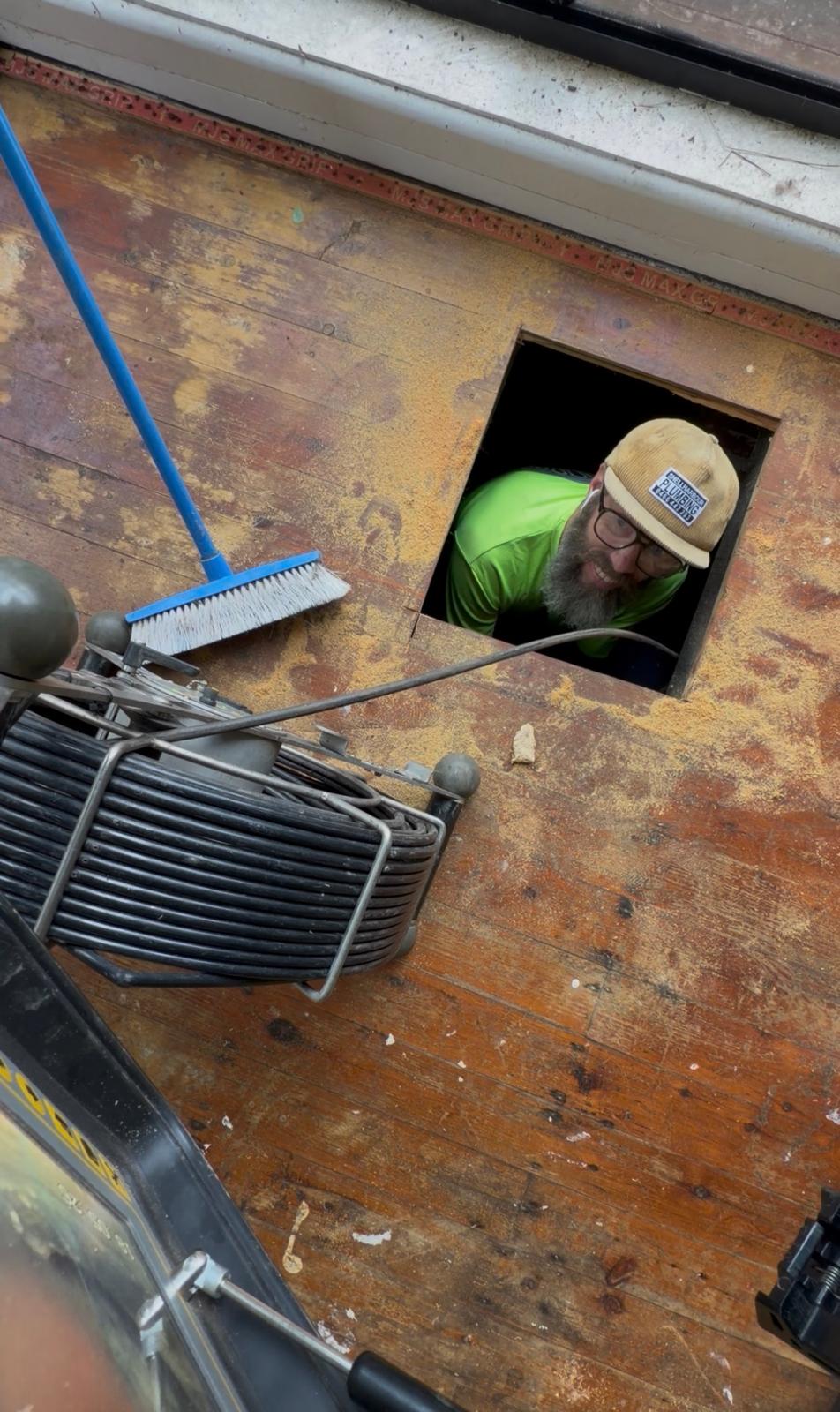
For main-line blockages we use a high-pressure water jetter on a pressure suited to the pipe. It cuts through grease, roots and silt and flushes the debris away, rather than just punching a hole through the middle. Where the cause isn't obvious, or the blockage keeps coming back, a CCTV drain camera shows whether it's tree roots, a broken pipe, a sag or a foreign object — so you fix the cause once instead of clearing the same drain every few months.
When to stop and call a plumber
- More than one fixture is blocked or gurgling
- Sewage or dirty water is coming up in the shower, floor waste or outside gully
- The blockage comes back within a day or two of clearing it
- You've tried a plunger and cleaned the trap and it's still blocked
- It's a wall-hung toilet or a pipe you can't reach
- There's a sewage smell along with the blockage
Keeping drains clear
- Wipe greasy pans with paper towel before washing them
- Use a strainer in the kitchen sink and a hair catcher in the shower
- Only flush toilet paper — 'flushable' wipes don't break down in the sewer
- If big trees grow near your sewer line, a periodic jet clean can stop root blockages getting serious
Frequently asked questions
- What is the best way to unblock a drain?
- Start mechanical: hot water and dish soap, then a plunger with the overflow sealed, then clean the trap, then a hand drain snake. If more than one fixture is blocked or it keeps coming back, the main drain needs jetting by a plumber.
- Does baking soda and vinegar unblock drains?
- Not a real blockage. It can freshen a slow-running drain, but it won't shift grease, hair, wipes or tree roots. A plunger, cleaning the trap or jetting is far more effective.
- Is it safe to pour boiling water down a drain?
- It's better to use hot tap water. Boiling water can soften PVC pipe joints and can crack a porcelain toilet pan or basin.
- What's the best way to unblock a shower drain?
- Lift the grate and pull out the hair with a hair-removal tool, then plunge with a cup plunger. If water still won't drain, or the shower backs up when other fixtures are used, the blockage is further down the line.
- Are chemical drain cleaners bad for pipes?
- Repeated use of caustic or acid cleaners can damage older pipes, seals and fixtures, and they rarely clear compacted blockages. They're also a hazard for anyone who has to open the drain later.
- How do plumbers unblock drains?
- Plumbers clear main-line blockages with a high-pressure water jetter set to suit the pipe, and use a CCTV drain camera where needed to find the cause — roots, a broken pipe, a sag or a foreign object.
- Do you unblock drains 24/7 across the Illawarra?
- Yes — Shellharbour, Warilla, Albion Park, Oak Flats, Dapto, Kiama and Wollongong. If sewage is overflowing, call 0466 442 293 any time.