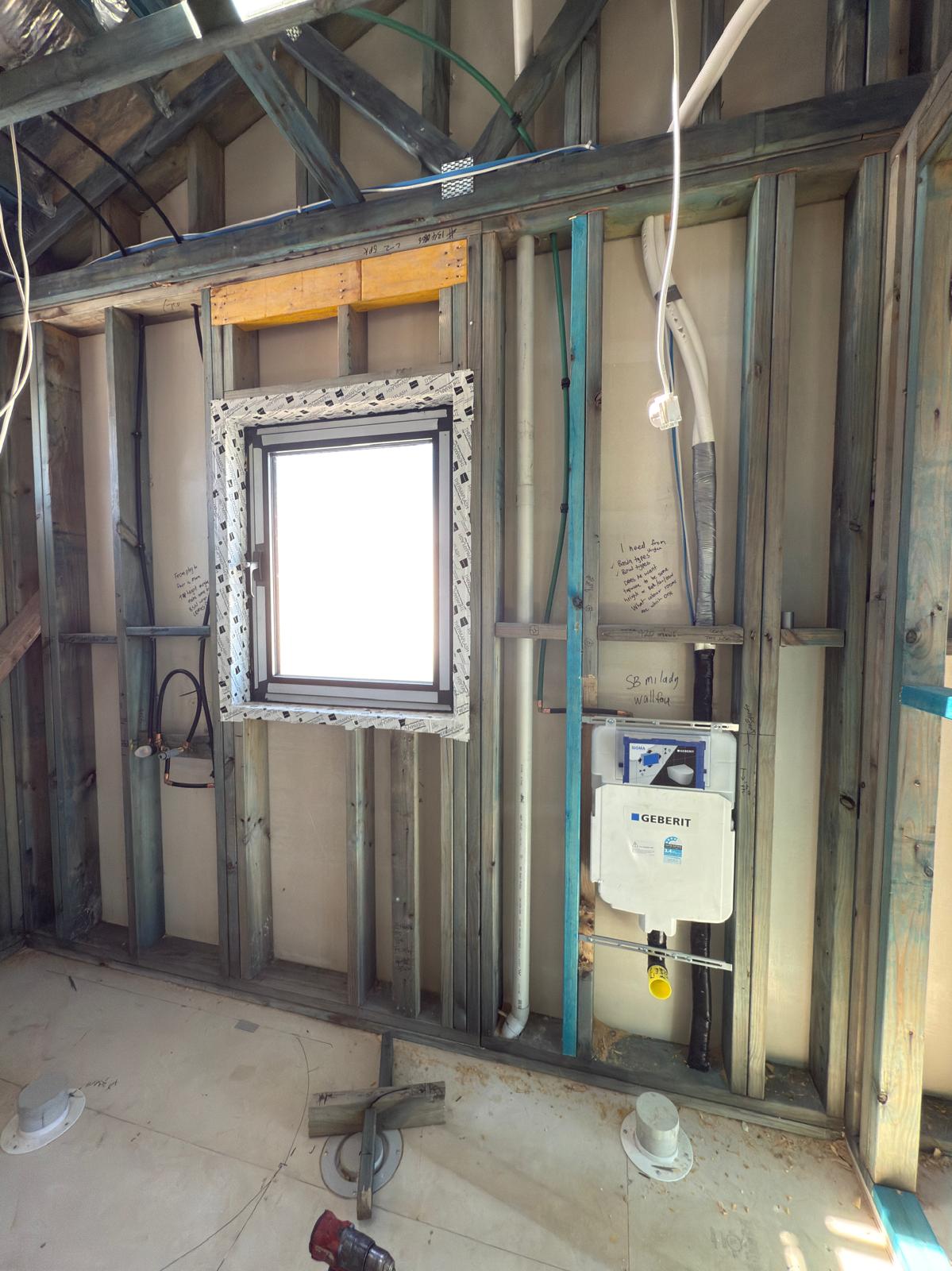
Yes. Installing or replacing a toilet in NSW connects to the sewer and the water supply, so it's licensed plumbing work. Minor maintenance such as swapping a toilet seat is fine to do yourself, but removing a pan, fitting a new suite or changing a cistern should be done by a licensed plumber. The bigger practical issue is buying a toilet that actually fits your existing waste — which is where most DIY attempts go wrong.
Measure these before you buy a new toilet
- Set-out: the distance from the finished wall to the centre of the floor waste (S-trap) or the height of the waste from the floor (P-trap). Every pan lists the set-out range it suits.
- Waste type: an S-trap goes into the floor, a P-trap goes into the wall. Many modern pans are adjustable, but not all.
- Water inlet position: where the stop tap comes out of the wall decides whether a close-coupled, back-to-wall or in-wall cistern is easiest.
- Room size: check door swing and the space to the vanity or shower screen, especially in small ensuites and powder rooms.
Send us a photo of your current toilet with a tape measure from the wall to the centre of the pan's floor bolts and we'll tell you which suites suit the set-out before you spend anything.
What a proper toilet replacement involves
We isolate the water, remove and dispose of the old suite, inspect the waste connection and floor flange, fit a new pan connector, install and level the pan, connect the cistern with a new flexible hose and isolation valve, then test for leaks and correct flush and refill. A failed pan connector is one of the most common causes of sewer smell in bathrooms, so we never reuse the old one.
Close-coupled, back-to-wall and wall-faced pans
Close-coupled suites are the most forgiving on set-out. Back-to-wall and wall-faced pans look cleaner and are easier to clean, but they hide the connection, so the set-out and the pan connector need to be exact. These are the installs where a mismeasure turns into a leak behind the pan months later.
In-wall cisterns and wall-hung toilets
In-wall cisterns like Geberit sit in a steel frame inside the wall, with only the flush plate visible. They're best fitted during a bathroom renovation, because the frame is installed at rough-in before the wall is sheeted and waterproofed. Retrofitting one into an existing bathroom means opening the wall. We install the frame, the waste and the water supply at rough-in, then hang the pan at fit-off.
Accessible toilets and older homes
For accessible bathrooms and ageing-in-place renovations, we install higher pans, correct circulation space and grab-rail backing where the design requires it. In older Illawarra homes we also check the condition of the earthenware sewer connection while the pan is off — and note that some older black plastic cisterns contain asbestos and need to be handled accordingly.
When a repair makes more sense
If the suite itself is sound, a running cistern, weak flush or loose seat is usually a repair, not a replacement. Our cistern repair guide covers the common fixes. We'll always tell you if a repair is the smarter option.
Water efficiency
Modern suites carry a WELS star rating. Replacing an old single-flush toilet with a dual-flush suite is one of the simplest ways to reduce household water use — useful for homes on rainwater tanks around Jamberoo, Croom and Kangaroo Valley.
Frequently asked questions
- Do you need a plumber to install a toilet in NSW?
- Yes. Installing or replacing a toilet connects to the sewer and water supply, which is licensed plumbing work in NSW. Changing a toilet seat is fine to do yourself.
- How do I know which toilet will fit my bathroom?
- Measure the set-out — the distance from the wall to the centre of the floor waste for an S-trap, or the height of the waste for a P-trap — and check it against the pan's listed set-out range. We can confirm suitability from a photo.
- What is the difference between an S-trap and a P-trap toilet?
- An S-trap toilet connects to a waste in the floor; a P-trap connects to a waste in the wall. Some pans are adjustable between the two, but you need to know which you have before buying.
- Can you install an in-wall cistern in an existing bathroom?
- Yes, but the wall has to be opened to fit the frame, then re-sheeted, waterproofed where required and tiled. It's most cost-effective during a bathroom renovation.
- Why does my new toilet smell or leak at the base?
- Usually the pan connector wasn't replaced or the set-out didn't match, so the seal isn't sitting correctly. It needs the pan lifted and a new connector fitted — silicone around the base won't fix it.
- Do you remove the old toilet?
- Yes, we remove and dispose of the old suite as part of the job, and inspect the sewer connection while it's off.
- Where do you install and replace toilets?
- Throughout Shellharbour, Shell Cove, Warilla, Albion Park, Oak Flats, Dapto, Kiama, Gerringong and Wollongong.