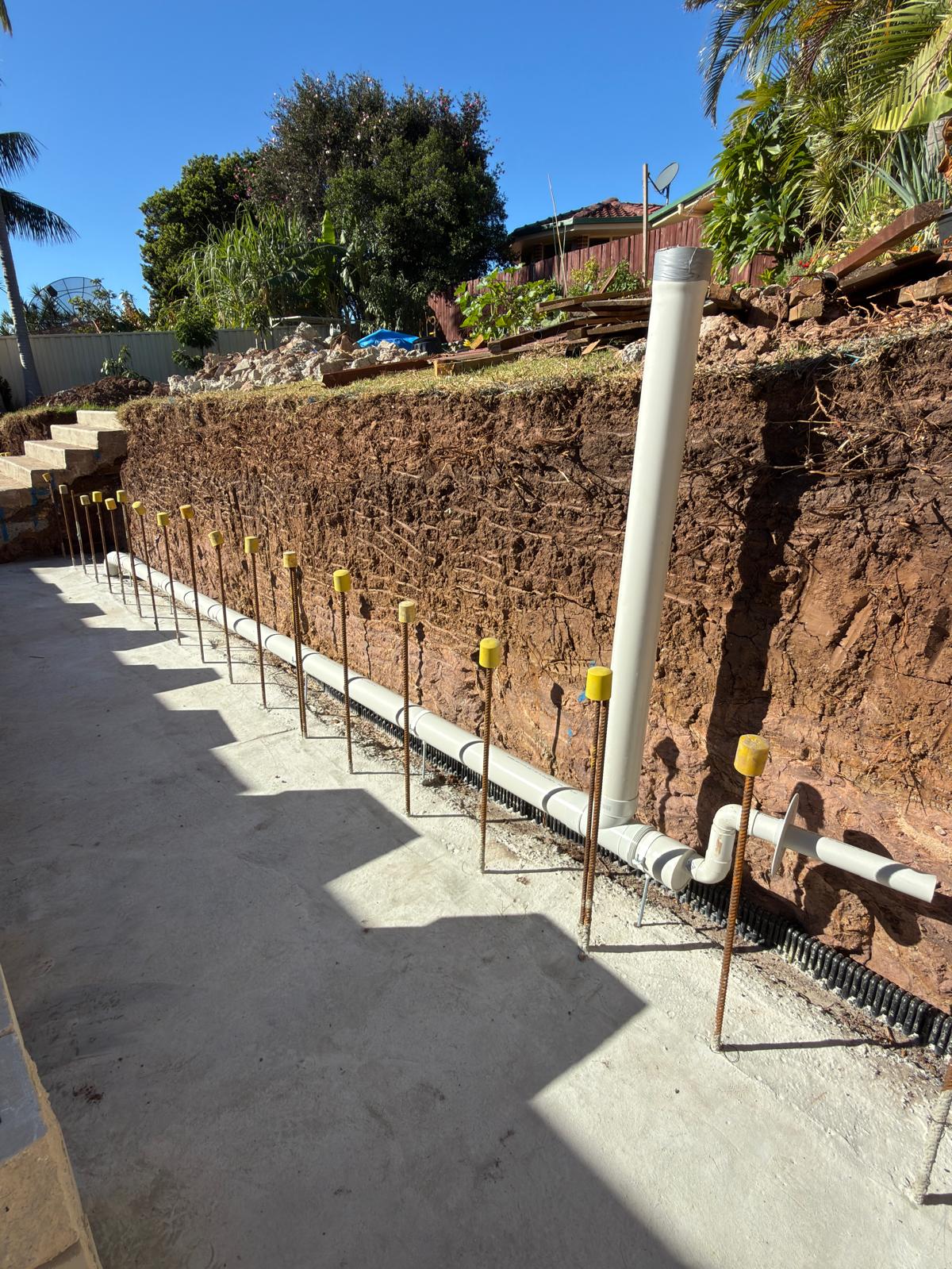
An ag drain (agricultural or subsoil drain) is a slotted pipe in a gravel trench that collects groundwater and carries it away by gravity. A sump pump sits in a pit at the low point of a property and pumps water up and out when gravity can't do the job — common on low-lying blocks, below-ground garages and wet subfloors. Most wet yards need an ag drain; you need a pump when there's nowhere lower for the water to go.
Why so many Illawarra yards stay wet
Lakeside blocks around Lake Illawarra, Warilla, Barrack Point and Windang sit on a high water table. The reactive clay across Albion Park, Calderwood and Dapto holds water at the surface instead of letting it soak away. Homes cut into slopes below the escarpment in Wollongong's northern suburbs and around Kiama collect runoff and seepage from the block above. Add an east coast low that drops a month of rain in a weekend and you get lawns that never dry, water against the slab edge and damp, musty subfloors.
Ag drain or sump pump? How to tell what you need
- Soggy lawn or garden beds that stay wet for days after rain — usually an ag drain.
- Water seeping through or out of the base of a retaining wall — an ag drain behind the wall, bedded in clean aggregate and wrapped in geotextile.
- Water pooling against the house, the slab edge or a shed — an ag drain plus a stormwater pit, and sometimes regrading the ground so it falls away from the building.
- Water sitting in the subfloor under the house — an ag drain along the high side of the house, sometimes with a sump pit at the low point.
- A below-ground garage, basement or courtyard that sits lower than the street — a sump pit and pump.
- Nowhere lower on the block to drain to by gravity — a sump pump to lift water to the legal discharge point.
How an ag drain works
An ag drain is a slotted pipe laid at a steady fall in a trench, surrounded by clean drainage gravel and wrapped in geotextile fabric so soil can't wash in and clog it. Groundwater moves into the gravel, enters the pipe through the slots and runs by gravity to a stormwater pit or another approved discharge point. Done properly it's invisible and keeps working for many years. Done badly — no fabric, no fall, or a pipe that isn't connected to anything — it silts up and the yard is wet again within a few seasons.
How a sump pump works
A sump is a pit at the lowest point of the area you're draining. Water from ag drains, surface grates or seepage collects in it, and a float switch starts a submersible pump when the level rises. The pump pushes the water through a rising main up to the stormwater system.
- A pump sized for the volume of water and the height it has to lift
- A non-return valve so pumped water doesn't run straight back into the pit
- A high-level alarm so you know if the pump has stopped working
- A removable lid and enough room in the pit for cleaning
- A plan for storms and power cuts — on critical sites such as basement garages, a second pump or a backup arrangement is worth considering
Where the water is allowed to go
Stormwater and groundwater must go to the stormwater system or another approved discharge point — never into the sewer. Connecting an ag drain, downpipe or sump pump to a sewer gully is illegal in NSW and overloads the sewer in heavy rain, which is exactly when it can least cope. You also can't simply direct water onto a neighbour's property. Shellharbour, Wollongong and Kiama councils can have site-specific requirements, so a licensed plumber should confirm the right discharge point for your block.
Signs your existing ag drain or sump pump has failed
- The yard is wetter now than it was when the drain was first put in
- The stormwater pit stays full or overflows in moderate rain
- The sump pump runs constantly, switches on and off rapidly, or hums without moving water
- The high-level alarm sounds, or water sits in the sump long after the rain has stopped
- A damp, musty smell or mould in the subfloor
- A retaining wall that weeps at the base or has started to lean
What we check on site
Before recommending anything, we work out where the water is actually coming from — surface runoff, groundwater, a downpipe discharging in the wrong spot, or a leaking water pipe. We check falls, look at the existing stormwater pits and lines, and clear them with a jetter if they're blocked, using a drain camera where it will genuinely help. Then we recommend the simplest fix that works. Sometimes that's a new ag drain or pump; sometimes it's just a blocked stormwater line or a disconnected downpipe.
If the ground stays wet even in dry weather, it's worth ruling out a leaking water service first. Our guide to finding a hidden leak walks you through the water meter test.
DIY vs licensed work
Digging a shallow trench and laying slotted pipe in a garden bed is something a handy homeowner can do. Connecting drainage to the property's stormwater system, installing a sump pit and pump with a rising main, or any work near sewer lines is drainage work for a licensed plumber. A sump pump also needs a suitable outdoor-rated power supply, which must be installed by a licensed electrician.
Frequently asked questions
- What is an ag drain?
- An ag drain (agricultural or subsoil drain) is a slotted pipe laid in a gravel-filled trench, usually wrapped in geotextile fabric. It collects groundwater from soggy ground or behind retaining walls and carries it by gravity to a stormwater pit or approved discharge point.
- Do I need a sump pump or an ag drain?
- If water can drain by gravity to a lower stormwater point, an ag drain is usually enough. You need a sump pump when the area you're draining — a basement garage, sunken courtyard or low subfloor — sits lower than the point the water has to go.
- Can I connect an ag drain or sump pump to the sewer?
- No. In NSW, stormwater and groundwater must not be connected to the sewer. It's illegal and overloads the sewer in heavy rain. It must go to the stormwater system or another approved discharge point.
- Why is there water under my house?
- Common causes are a high water table, runoff from higher ground, downpipes discharging next to the house, blocked stormwater lines, or a leaking water or drain pipe under the house. A plumber can work out which one before recommending drainage.
- Why does my sump pump keep running?
- A pump that runs non-stop may have a stuck float switch, a failed non-return valve letting water run back, a pump too small for the inflow, or a leak feeding the pit. A pump that hums without pumping may be blocked or failing.
- How often should a sump pump be serviced?
- At least once a year, ideally before the wetter months: clean out the pit, test the float switch and alarm, and check the non-return valve. Pits in sandy or silty ground may need cleaning more often.
- Do you install ag drains and sump pumps across the Illawarra?
- Yes — ag drains, stormwater pits, retaining wall drainage and sump pumps across Shellharbour, Lake Illawarra, Warilla, Albion Park, Kiama and Wollongong. Call 0466 442 293.