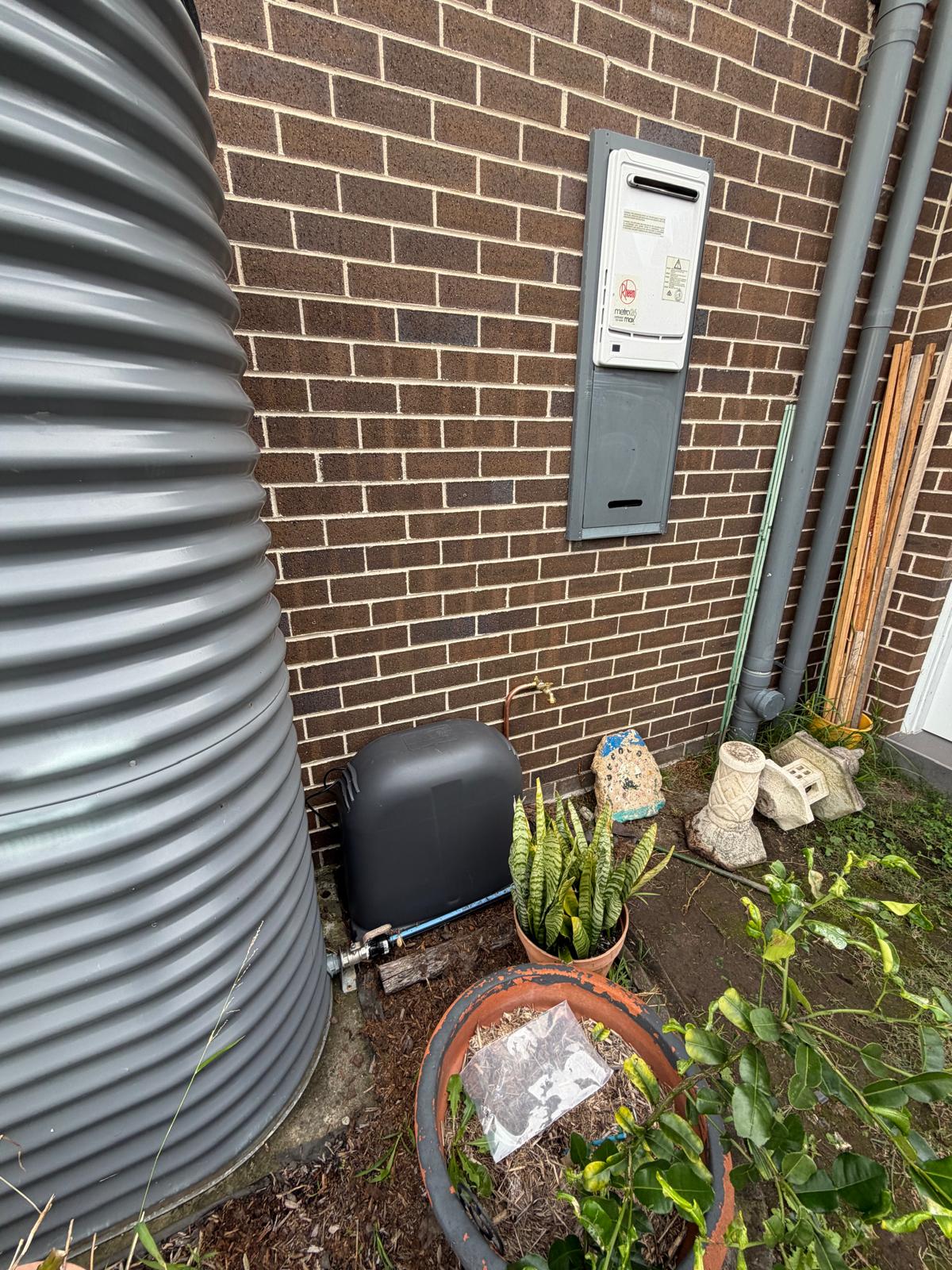
Most hot water system repairs come down to one failed part — an element or thermostat on an electric tank, a thermocouple, pilot or gas valve on gas storage, an ignition or flame fault on a continuous-flow unit, or a relief or tempering valve on any system. Those are usually repairable, often on the first visit. If the tank itself is leaking, it can't be repaired and needs replacing.
Before you call: three quick checks
- Electric: check the hot water circuit breaker at the switchboard and the isolating switch beside the tank. If the breaker trips again straight away, leave it off — that points to an element or wiring fault.
- Gas storage: check the gas is on and, on LPG, that the bottle isn't empty. If the pilot is out, follow the relight instructions on the unit's label — once only.
- Continuous flow: check the unit has power and write down any error code on the controller. It tells the plumber what's likely wrong before they arrive.
Electric storage tank repairs
- Failed heating element — the most common electric fault. The tank goes cold or lukewarm and may trip the breaker.
- Faulty thermostat — water too hot, too cold or inconsistent, sometimes with power bills creeping up.
- Pressure and temperature relief valve — constant dripping or flowing from the drain line. These valves are a service item and should be checked regularly.
- Worn sacrificial anode — you won't notice it, but replacing it around year five helps protect the tank lining.
Gas storage repairs
- Pilot won't stay lit — usually a thermocouple or gas control valve fault.
- Pilot keeps blowing out — common on exposed coastal sites in strong southerlies; sometimes the unit needs a better-protected position or a flue check.
- Soot, yellow flames or a burning smell — turn the gas off and call a licensed gas fitter straight away.
- Relief valve faults, the same as electric tanks.
Gas continuous-flow (instantaneous) repairs
- Ignition or flame failure codes — often a gas supply problem, a failed igniter or a flame sensor fault.
- Water not hot enough when several taps run — a gas supply that's too small for the unit, or a scaled heat exchanger.
- Unit lights then cuts out — commonly a fan, flue or sensor fault.
- Controller faults — bathroom or kitchen controllers that stop responding or show the wrong temperature.
Heat pump and solar repairs
Heat pumps can lose performance through fan, compressor or refrigerant faults, and most have an electric boost element that fails just like a standard tank. Solar hot water systems have roof collectors, a circulation pump, a controller and a gas or electric booster — leaks at the collectors, failed pumps and booster faults are the common repairs. Some heat pump refrigeration work has to go to the manufacturer's service agent; if that's the case, we'll tell you.
Tempering valve faults (any system)
Bathrooms in NSW are supplied through a tempering valve that blends hot and cold water to a safe temperature. When it wears, showers go lukewarm, swing between hot and cold, or lose pressure even though the tank is full of hot water. It's one of the most commonly missed faults — the tank gets blamed when the valve is the problem.
When a repair isn't worth it
- Water leaking from the tank body, seams or base
- Rust through the outer casing, or rusty hot water from the taps
- The system is over 10–12 years old and needs a major part
- You're paying for repeat repairs on the same unit
In those cases we'll explain your replacement options — like-for-like, gas continuous flow or a heat pump — and you choose. Our repair or replace guide walks through the decision in more detail.
What happens on a repair visit
We test the power or gas supply, the controls and the valves, find the part that has actually failed, and explain the fix before any work starts. We carry common parts for the major brands — Rheem, Rinnai, Dux and Thermann — and can source anything else quickly through local suppliers. Gas work is leak-tested, and you receive a Certificate of Compliance where the work requires one.
Safety first
If the relief valve is pouring hot water, water is leaking near electrics, or you smell gas, turn the system off at the switchboard or gas valve and call. Never cap, plug or tie down a relief valve — it's the part that stops the tank over-pressurising.
Frequently asked questions
- Can a hot water system be repaired?
- Usually, yes. Elements, thermostats, thermocouples, gas valves, igniters, relief valves and tempering valves can all be replaced. The exception is a leaking tank — once the tank body leaks, the system needs replacing.
- Can a leaking hot water system be repaired?
- It depends where it's leaking. A leaking valve, fitting or pipe connection can be repaired. Water coming from the tank body or base means the tank has failed and must be replaced.
- Why is my hot water relief valve dripping?
- A small drip while the tank heats can be normal. A constant drip or flow usually means the valve is worn, or the water pressure or temperature is too high. Have it checked — and never block the valve.
- Who can repair a hot water system in NSW?
- A licensed plumber repairs hot water systems. Any work on gas hot water — including gas valves, burners and gas connections — must be done by a licensed gas fitter.
- Who pays for hot water repairs in a rental?
- In NSW, a failed hot water service is treated as an urgent repair, and repairs are generally the landlord's responsibility. Tenants should tell the landlord or agent straight away. We work directly with property managers across the Illawarra.
- Will you repair a system you didn't install?
- Yes. We repair all major brands of electric, gas, solar and heat pump hot water systems regardless of who installed them.
- Do you repair hot water systems across the Illawarra?
- Yes — Shellharbour, Albion Park, Warilla, Oak Flats, Dapto, Kiama and Wollongong, 24/7 for urgent faults. Call 0466 442 293.